Support US

Increase our impact

We exist to amplify and expand the work of our grassroots member organisations across Africa supporting children of incarcerated parents, who are delivering critical support with limited resources.

By strengthening their access to strategic partnerships, funding, and resources, we help build organisational capacity, generate a stronger evidence base for policy and practice reforms, and enable more effective advocacy and systems change.

There are several ways to contribute to this work, including through partnership, supporting access to funding, or making direct financial contributions to these organisations on the ground.
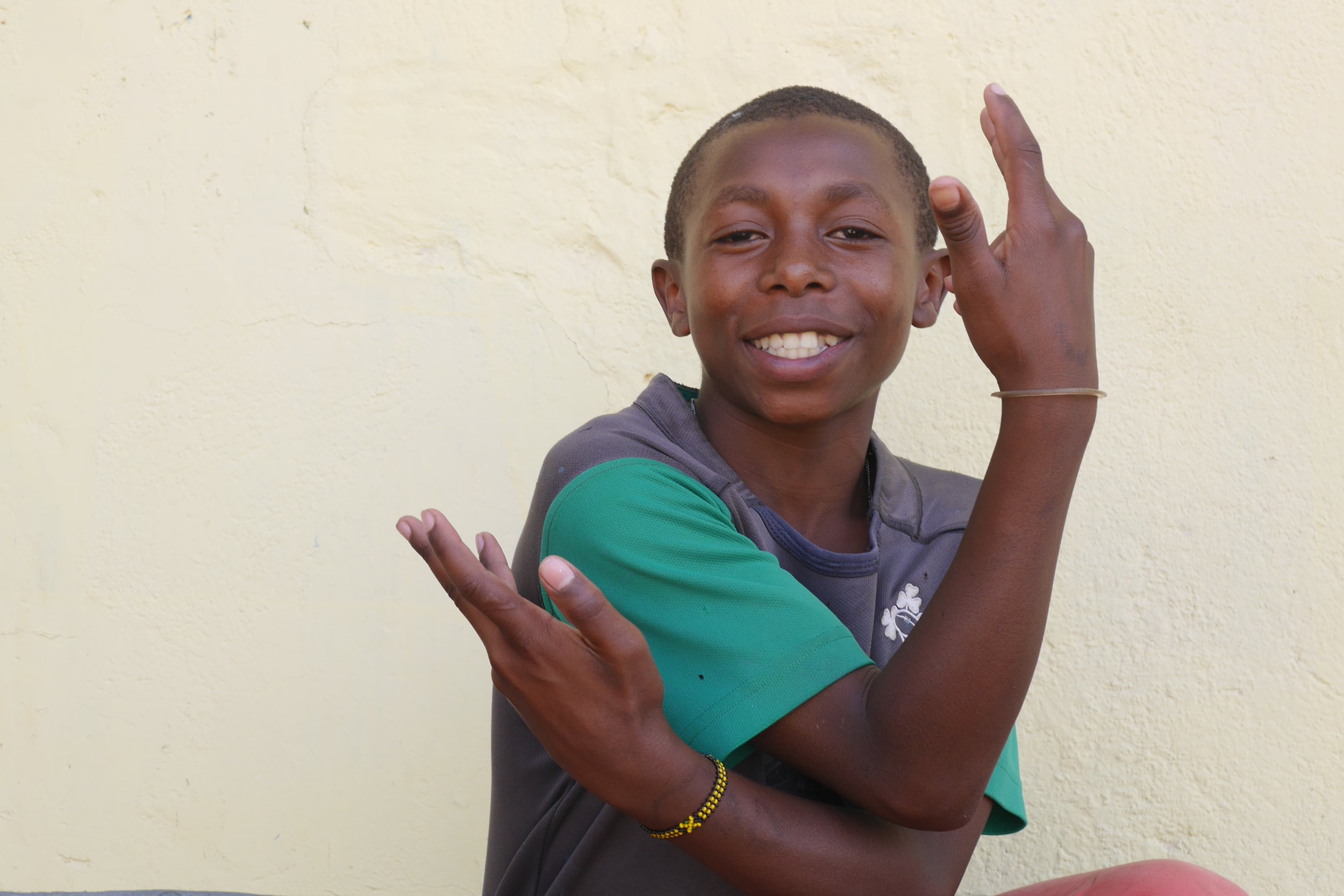
An older boy smiles toward the camera while raising their hands in a playful gesture.

ways to strengthen our impact

Strategic partnerships

We collaborate with national and international change-makers including policy actors, aligned organisations and strategic partners with relevant expertise to strengthen our capacity and our advocacy, research, and systems change efforts.

We welcome individual or organisational partners, who can bring strategic insight, technical expertise, or capacity-building support through collaboration, advisory input, or partnership to amplify impact across our network.

SUPPORT OUR ACCESS TO FUNDING

We are actively seeking partnerships with funders and intermediaries to unlock resources for our grassroots network of organisations across Africa working with children affected by parental imprisonment.

We welcome opportunities to connect with funders, align partners to relevant funding streams, and co-develop initiatives that strengthen our partners’ impact.

make a donation to our partners

Our grassroots partner organisations are delivering life-changing work supporting children of incarcerated parents, but struggling to fully realise their objectives due to limited resources.

Direct financial support is one of the most powerful ways to strengthen their capacity, expand their reach, and ensure more children are supported to thrive.

Even a small donation can make a significant difference. If you would like to support one of our partners, we would welcome the opportunity to connect.
  • "I used to think I was alone but now I know there are others like me and that makes me feel a little braver."

    11-year-old child supported by Jedidiah trust in Zimbabwe

  • “The Committee expresses serious concern about the conditions of detention of women detainees, including pregnant women and women detained with their children, in particular the length of pretrial detention and the lack of measures aimed at facilitating women’s access to justice and the fact that women detainees are not systematically separated from men detainees.”

    UN Committee on the Elimination of Discrimination against Women, Concluding Observations on Benin, 2013, para. 36

  • “I value [my children] so much and I had a lot of dreams for them too. Before I got in here, I was keen about their education. I spent a lot of my resources making sure they enjoy school. I wanted them to go to school to become “somebody” in future, but these plans have been destroyed because of my imprisonment.” (Father on death row in Ghana)

    Father on death row in Ghana (Adu-Poku, 2024, p.173, International Criminology)

  • “…[The Committee] remains seriously concerned about consistent reports of overcrowding, poor hygienic and sanitary conditions, lack of sleeping space, food and water, the absence of adequate health care, including for pregnant women… co-detention of juveniles with adults, inadequate protection of juvenile prisoners and children detained with their mothers from violence in prisons and places of detention in the State party.”

    UN Committee against Torture, Concluding Observations on Ethiopia, 2011, para. 26

  • "Accurate global data and reliable estimates on the number of pregnant and/or breastfeeding women in prisons, and a global count of children in prison are, however, not available, as many countries do not collect data, and where records exist, they are often inaccurate."

    Van Hout et al. (2025), The Lancet Obstetrics, Gynaecology, & Women’s Health, 1(4), p. 2

  • “The Committee notes with concern the conditions of women in detention, including a lack of systematic separation from male detainees, abuse perpetrated by police and prison authorities and inappropriate treatment for pregnant women in detention and those accompanied by their children.”

    UN Committee on the Elimination of Discrimination against Women, Concluding Observations on Mali, 2016, para. 41

  • “I really fear for the lives of my children. My last child is very young and immature. I fear she might go out to play and get beaten by neighbours or something like that. I am also afraid for their educational well-being. How will they get the required materials for school? I fear they might stop going to school and destroy their future. I am worried about how the children would be taken care of should they get sick. I am troubled about everything concerning the children."

    38-year-old mother of four children sentenced to 3 years in prison in Ghana (Adu-Poku, 2024, p.173, International Criminology)

  • “…[The Committee] is also concerned at… the detention of pregnant and breastfeeding women and persons with disabilities in general custodial facilities and without access to appropriate health services.”

    UN Committee against Torture, Concluding Observations on Nigeria, 2021, para. 19

  • “…[The Committee] is concerned that the best interests of the child are not always taken into account, including when sentencing parents, that incarcerated parents are not guaranteed systematic contact with their children and the Child Development Unit, and that there is insufficient psychological treatment or social support to children of incarcerated parents who do not reside in institutional care.”

    UN Committee on the Rights of the Child, Concluding Observations on Mauritius, 2015, para. 47